


Low Tech Carpet Plants: Complete Guide for Aquarium Success
Creating a lush, carpet-like foreground in your aquarium doesn't require expensive CO2 systems or advanced equipment. Low tech carpet plants offer aquarium enthusiasts the opportunity to achieve stunning aquascapes using minimal technology and straightforward maintenance routines. These hardy species thrive in simpler setups, making them perfect for beginners and experienced hobbyists who prefer natural, uncomplicated approaches to planted tanks. Understanding which plants work best in low-tech environments and how to optimize conditions for their growth transforms the challenge of carpeting into an achievable goal for any aquarist.
Understanding Low Tech Aquarium Environments
Low tech aquariums operate without pressurized CO2 injection, relying instead on natural carbon dioxide production from fish respiration and organic decomposition. These setups typically use moderate lighting, simple filtration, and minimal fertilization compared to high-tech planted tanks.
The key to success with low tech carpet plants lies in managing expectations and choosing species adapted to these conditions. While growth rates will be slower than CO2-injected systems, the reduced maintenance requirements and lower operational costs make this approach sustainable for long-term aquarium keeping.
Essential Parameters for Carpet Plant Success
Water chemistry plays a crucial role in supporting healthy carpet development. Most low tech carpet plants prefer slightly acidic to neutral pH levels between 6.5 and 7.5, with soft to moderately hard water. Temperature stability matters more than specific ranges, though most species thrive between 72-78°F.
Key water parameters to monitor:
- pH: 6.5-7.5
- Temperature: 72-78°F
- KH: 3-8 dKH
- GH: 4-12 dGH
Lighting intensity determines photosynthetic capacity without CO2 supplementation. Moderate lighting between 20-40 PAR at substrate level provides sufficient energy for carpet growth while preventing excessive algae. Low light aquarium plants can adapt to various lighting conditions, making them reliable choices for different tank configurations.
Top Species for Low Tech Carpeting
Selecting appropriate plant species determines whether your carpeting project succeeds or struggles. Not all ground-cover plants tolerate low-tech conditions equally well.
Marsilea Species
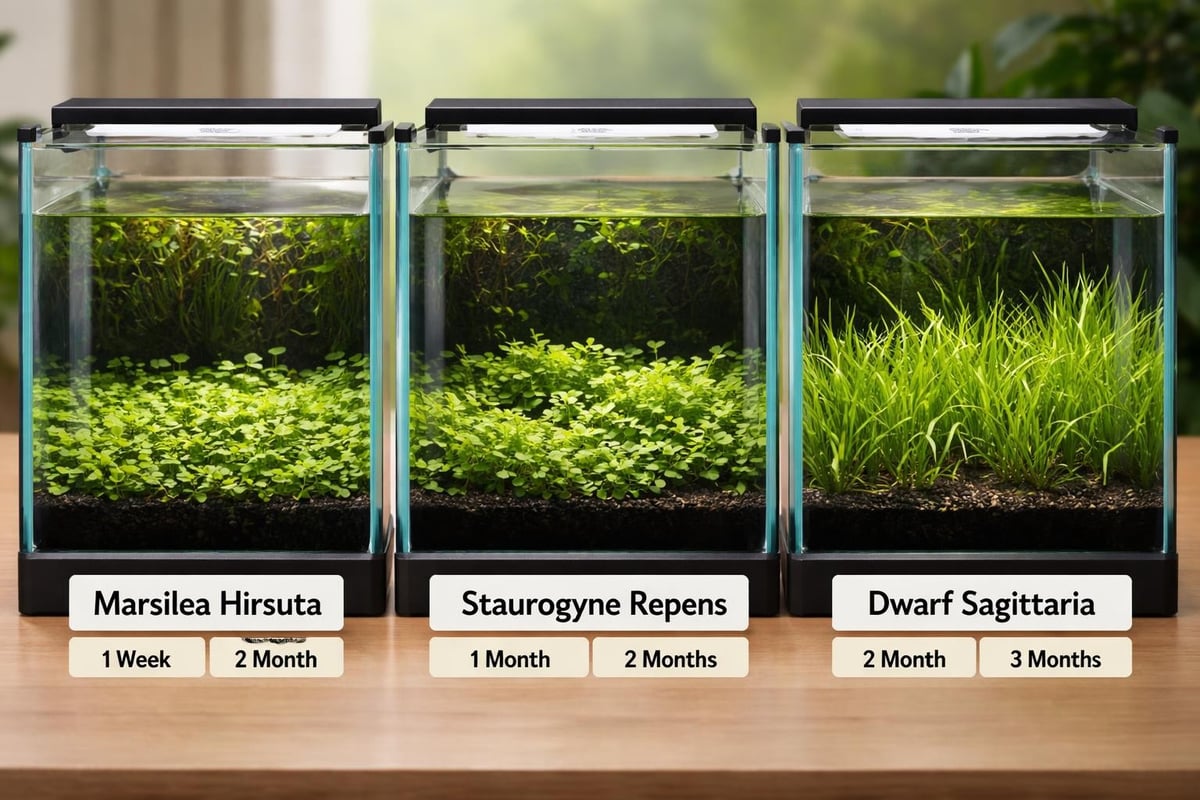
Marsilea hirsuta and Marsilea crenata rank among the most reliable low tech carpet plants available. These four-leaf clover-like plants spread through runners and adapt to various lighting conditions. They grow slowly but steadily, eventually forming dense mats that suppress algae growth.
Marsilea tolerates low light better than many alternatives, making it ideal for tanks with limited illumination. The plants maintain compact growth under moderate light while developing taller leaves in dimmer conditions. This adaptability makes them forgiving for aquarists still learning to balance their tank parameters.
Staurogyne Repens
This Brazilian native creates beautiful mid-height carpets without CO2 injection. Staurogyne repens features small, bright green leaves on compact stems that spread horizontally when properly trimmed. According to guides on growing low-tech carpet plants, this species performs exceptionally well in shallow tanks with nutrient-rich substrates.
Regular trimming encourages lateral growth and prevents the plant from growing too tall. The species propagates readily from cuttings, allowing aquarists to fill bare spots quickly.
Dwarf Sagittaria (Sagittaria subulata)
Sagittaria varieties provide grass-like texture to aquarium foregrounds. Dwarf Sagittaria sends out runners prolifically, creating dense stands that resemble miniature lawns. This species tolerates a wide range of conditions and grows well in both low and high-tech setups.
The plant reaches 3-6 inches in height, making it suitable for mid-ground placement or taller foreground areas. Runners spread rapidly once established, filling empty substrate areas within months. Detailed information about aquarium carpeting plants highlights Sagittaria as particularly beginner-friendly.
Substrate Selection and Preparation
Substrate composition significantly impacts carpet plant establishment and long-term health. Low tech carpet plants benefit from nutrient-rich substrates that support root development without requiring constant fertilization.
Aquasoil Versus Inert Substrates
| Substrate Type | Advantages | Disadvantages | Best For |
|---|---|---|---|
| Aquasoil | Rich in nutrients, lowers pH, promotes root growth | Expensive, breaks down over time, can cloud water initially | Demanding carpet species, new setups |
| Sand with root tabs | Affordable, natural appearance, stable long-term | Requires supplemental fertilization, less nutrient density | Budget builds, established tanks |
| Gravel with root tabs | Good drainage, widely available, stable | Minimal inherent nutrition, may need more frequent fertilizing | Mixed plantings, community tanks |
Nutrient-rich aquasoil provides the best foundation for low tech carpet plants, offering readily available nutrition without frequent intervention. The substrate buffers water chemistry toward acidic conditions preferred by most carpeting species.
For budget-conscious setups, combining inert sand or fine gravel with root tabs near planting areas delivers adequate nutrition. Position root tabs every 4-6 inches in carpeted sections, replacing them every 3-4 months as nutrients deplete.
Depth Considerations
Carpet plants generally require 2-3 inches of substrate depth for healthy root development. Shallow substrate beds restrict root growth and limit nutrient access, resulting in stunted plants and slower spread rates.
Sloping substrate from back to front creates visual depth while providing adequate depth for both foreground carpets and background plants. Start with 3-4 inches at the rear, gradually reducing to 2 inches in the front.
Planting Techniques for Dense Coverage
Proper planting methodology accelerates carpet establishment and ensures even coverage. Different species require specific approaches for optimal results.
Individual Plant Spacing
Space individual plants or small clumps 1-2 inches apart in a grid pattern. This spacing allows room for lateral growth while creating visual fullness relatively quickly. Closer spacing produces faster coverage but requires more initial plants and may lead to overcrowding.
Step-by-step planting process:
- Divide plants into small portions (2-5 stems or leaves per bunch)
- Use tweezers to plant individual portions into substrate
- Insert at 45-degree angle to secure roots properly
- Space evenly across intended carpet area
- Press substrate gently around each planted section
For runner-producing species like Marsilea and Sagittaria, planting in rows simplifies future maintenance and encourages directional spreading.
The Dry Start Method
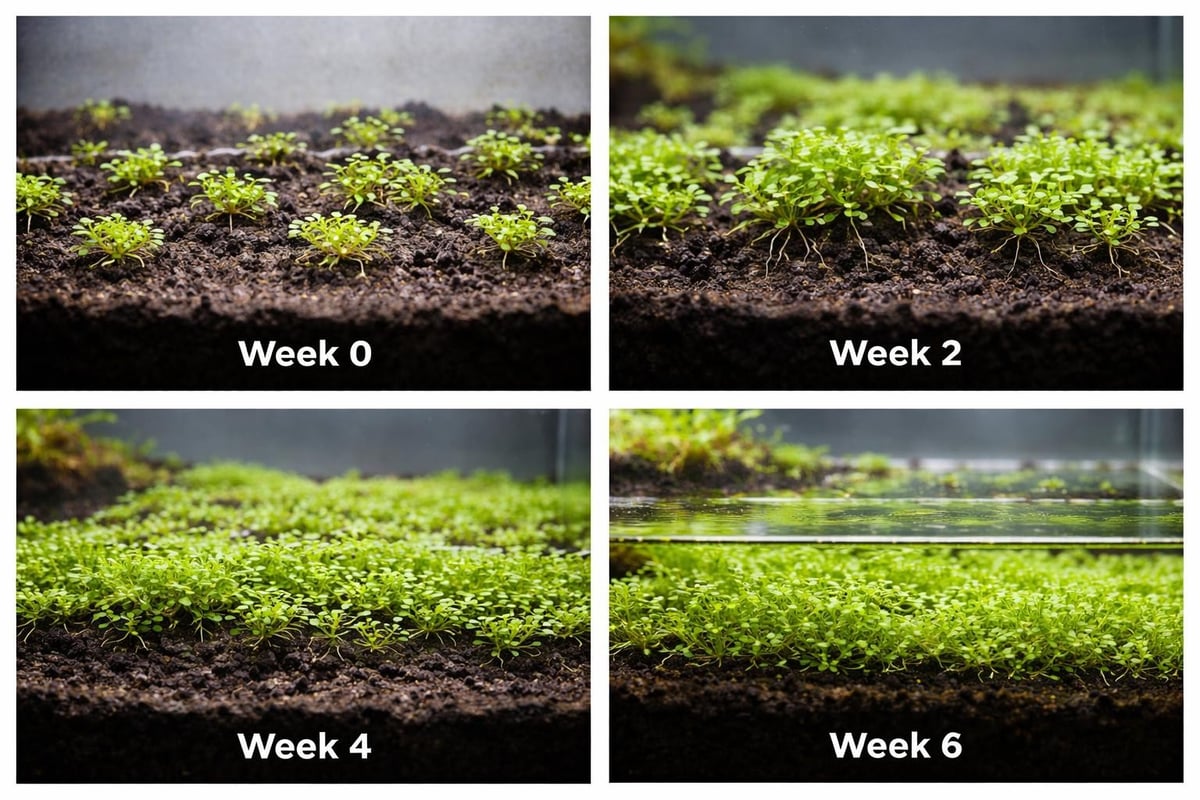
The dry start method (DSM) accelerates carpet establishment before flooding the tank. This technique allows plants to develop strong root systems in humid, emersed conditions where CO2 access is unlimited. Information about how to grow carpeting plants emphasizes DSM as particularly effective for low-tech setups.
Fill the tank with 1-2 inches of water, leaving substrate exposed. Plant carpet species as normal, then cover the tank with plastic wrap to maintain high humidity. Mist daily to prevent drying, and provide 8-10 hours of moderate lighting.
After 4-8 weeks, once plants show significant growth and root development, slowly fill the tank over several days. This gradual transition allows plants to adapt to submersed growth without shock.
Lighting Strategies for Low Tech Systems
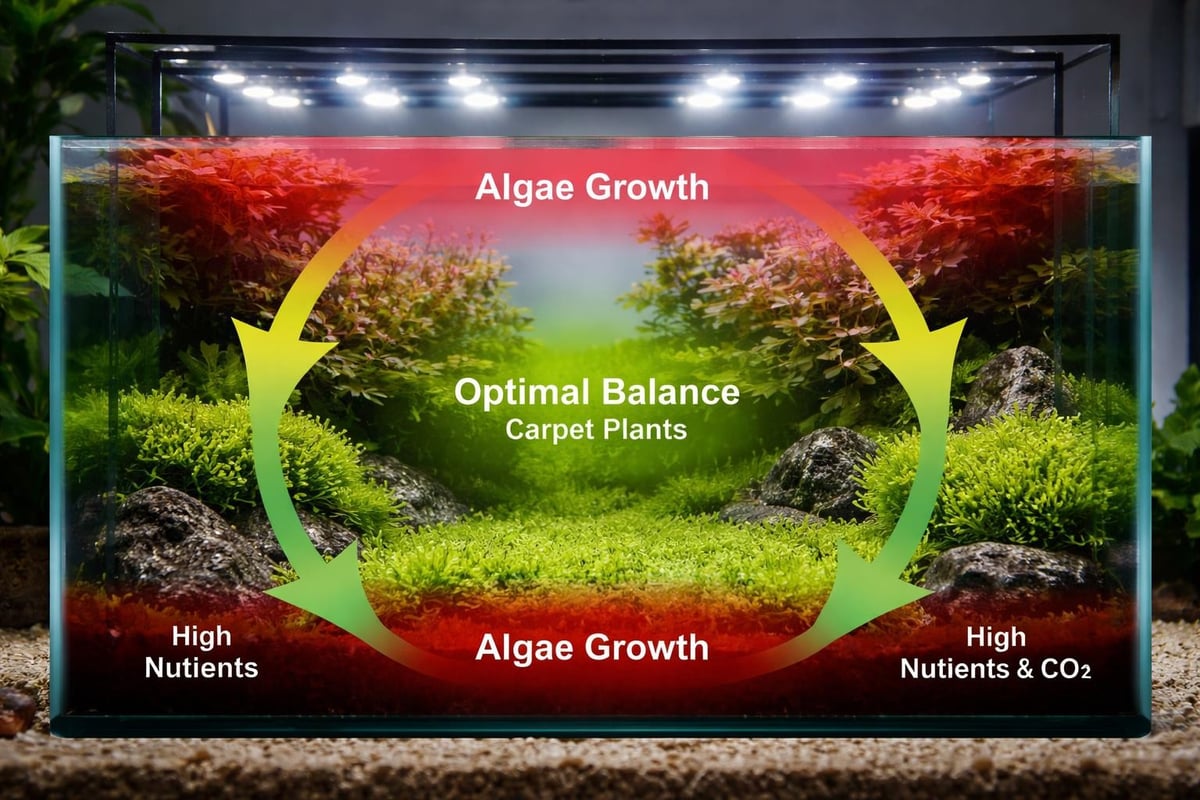
Appropriate lighting intensity balances plant growth with algae prevention in systems without CO2 injection. Too much light without adequate carbon supplementation triggers algae outbreaks, while insufficient light prevents carpet development.
Determining Proper Intensity
For low tech carpet plants, target 20-40 PAR (Photosynthetically Active Radiation) at substrate level. This moderate intensity supports photosynthesis without overwhelming the system's limited CO2 availability.
Most LED fixtures designed for planted aquariums provide adjustable intensity. Start at 50% power for the first month, gradually increasing to 70-80% as plants establish and begin spreading.
Duration recommendations:
- Initial 2 weeks: 6 hours daily
- Weeks 3-4: 7 hours daily
- Established carpet: 8 hours daily
- Mature growth: Up to 10 hours daily
Consistent photoperiods matter more than extended hours. Use timers to maintain reliability, as irregular lighting schedules stress plants and encourage algae.
Spectrum Considerations
Full-spectrum lighting with emphasis on red (630-660nm) and blue (440-460nm) wavelengths optimizes carpet plant growth. Most quality aquarium LEDs provide appropriate spectrums, though inexpensive fixtures may lack necessary red wavelengths.
Color temperature between 5000-7000K appears natural while supporting photosynthesis. Higher temperatures (8000K+) create clinical appearances and may not support carpeting as effectively.
Maintenance Requirements and Routines
Low tech carpet plants demand less intensive maintenance than high-tech alternatives, though consistent care ensures healthy, attractive growth.
Fertilization Strategies
Without CO2 injection, nutrient demands decrease significantly. However, carpet plants still require essential macro and micro nutrients for healthy development.
| Nutrient Type | Frequency | Method | Purpose |
|---|---|---|---|
| Root tabs | Every 3-4 months | Insert near heavy root feeders | Provides iron, potassium, trace elements |
| Liquid fertilizer | Weekly at 50% dose | Add after water changes | Supplies nitrogen, phosphorus, potassium |
| Potassium | Twice weekly | Liquid supplement | Prevents yellowing, supports cellular function |
The wide selection at Canton Aquatics includes plants with varying nutritional requirements, allowing aquarists to match species to their preferred maintenance levels.
Avoid over-fertilization, which promotes algae growth more than plant development in low-tech systems. Start conservatively, increasing dosages only if plants show deficiency symptoms like yellowing or stunted growth.
Trimming and Propagation
Regular trimming maintains carpet density and prevents excessive vertical growth. Most low tech carpet plants benefit from trimming every 4-6 weeks once established.
Remove yellowing or damaged leaves promptly to prevent decay and maintain water quality. For species like Staurogyne repens, cut stems to desired height and replant healthy tops to fill sparse areas.
Runner-producing plants like Marsilea and Sagittaria require minimal intervention. Simply remove runners extending beyond desired boundaries and transplant them to expand coverage or start new carpets.
Troubleshooting Common Challenges
Even hardy low tech carpet plants encounter occasional difficulties. Recognizing and addressing issues early prevents long-term setbacks.
Slow or Stalled Growth
Insufficient lighting ranks as the primary cause of stagnant carpet development. Verify PAR levels at substrate and increase intensity or duration if measurements fall below 20 PAR.
Nutrient deficiencies also limit growth rates. According to comprehensive guides on low-light carpet plants, iron deficiency commonly affects carpeting species, causing yellowing and poor spreading. Add root tabs and increase liquid fertilization gradually.
Compacted substrate restricts root development and oxygen exchange. Gently disturb substrate surface monthly without uprooting plants to improve aeration.
Algae Competition
Algae outcompetes slow-growing carpet plants when nutrients and light exceed available CO2. Building a planted aquarium low-tech setup requires careful balance to prevent algae dominance.
Algae prevention strategies:
- Reduce lighting duration by 1-2 hours
- Decrease fertilization by 25-50%
- Increase water change frequency to 30% weekly
- Add floating plants to absorb excess nutrients
- Introduce algae-eating species (shrimp, snails, certain fish)
Established carpets naturally suppress algae by consuming available nutrients and blocking light from substrate. Patience during establishment phase proves essential.
Melting or Die-back
Sudden environmental changes trigger melting, where plants shed leaves and appear to die. This commonly occurs after initial planting or significant parameter shifts.
Most low tech carpet plants recover from melting if root systems remain healthy. Maintain stable conditions, continue regular maintenance, and allow 2-4 weeks for new growth to emerge. Remove decaying plant matter to prevent water quality deterioration.
Temperature fluctuations stress plants significantly. Ensure heater reliability and avoid placing tanks near windows or heating vents that create temperature swings.
Combining Carpet Plants with Other Species
Successful aquascapes layer different plant types to create depth and visual interest. Low tech carpet plants form the foundation that supports mid-ground and background species.
The diverse selection of aquarium plants available enables aquarists to design cohesive planted layouts using species with compatible requirements. Combine low-growing carpets with taller stem plants and focal-point specimens for dynamic displays.
Compatible Mid-Ground Plants
Anubias varieties provide excellent contrast to fine-textured carpet plants. These rhizome plants attach to hardscape rather than planting in substrate, eliminating root competition. Their broad leaves create visual weight above delicate carpets.
Cryptocoryne species offer varied colors and textures while tolerating low-tech conditions admirably. Position crypts in mid-ground areas where their moderate height complements shorter foreground carpets.
Background Plant Selection
Vertical stems create necessary height variation in aquascapes. Stem plants like Hygrophila and Ludwigia grow reliably without CO2 while providing contrasting forms to horizontal carpets.
Amazon swords and similar rosette plants anchor corners and sides of aquascapes. Their substantial leaf structures balance intricate carpet textures and guide viewer attention through the composition.
Tank Size Considerations for Carpeting Projects
Tank dimensions influence carpet plant success rates and species selection. Larger tanks provide more stable parameters, while smaller tanks offer advantages for certain approaches.
Shallow Versus Deep Tanks
Shallow tanks (12 inches or less in height) excel for low-tech carpeting. Light penetrates substrate more effectively, and smaller water volumes require less intense lighting to achieve adequate PAR levels.
Resources about 15 low-tech carpet plants note that standard-depth tanks succeed with proper lighting but demand more powerful fixtures to compensate for increased distance from substrate.
Consider rimless cube-style aquariums for carpeting showcases. The equal dimensions create natural viewing perspectives that highlight foreground plantings.
Footprint and Coverage Area
Larger footprints require more plants and longer establishment times but create impressive finished displays. Budget both time and money appropriately for extensive carpeting projects.
Small nano tanks (5-10 gallons) establish carpets quickly with minimal plant investment. These make excellent testing grounds for new aquarists learning low-tech methods before tackling larger installations.
Advanced Techniques for Optimal Results
Experienced aquarists employ refined strategies to maximize carpet plant performance in low-tech environments.
Biofilm and Microbial Support
Mature aquariums develop beneficial bacterial populations that support plant nutrition through nutrient cycling. Avoid completely replacing filter media or excessive substrate cleaning that eliminates these microbial communities.
Introducing small amounts of mulm (decomposed plant matter) from established tanks accelerates beneficial bacteria colonization in new setups. This organic material provides gentle, continuous nutrient release.
Hardscape Integration
Positioning rocks and driftwood strategically guides carpet growth patterns and creates natural-looking transitions. Plants spread around obstacles, creating organic flow rather than rigid geometric patterns.
Hardscape elevation changes add dimension to carpeted areas. Slight substrate mounding around wood pieces or stone arrangements creates depth perception and prevents monotonous flatness.
Seasonal Adjustments
Even stable aquariums experience subtle seasonal variations in temperature and ambient light. Adjust photoperiods and fertilization slightly to compensate for these changes and maintain consistent growth rates.
Winter months may require slightly increased artificial lighting duration, while summer heat might necessitate reduced photoperiods to prevent temperature-related stress.
Cost Analysis and Budget Planning
Low-tech carpeting projects vary significantly in cost depending on tank size, plant selection, and equipment quality. Information about challenges with low-light carpet plants helps set realistic expectations about initial investments versus ongoing expenses.
Initial Setup Costs
| Component | Budget Option | Mid-Range Option | Premium Option |
|---|---|---|---|
| Substrate (20 gal) | $30-40 (sand + tabs) | $60-80 (commercial aquasoil) | $100-120 (premium aquasoil brands) |
| Lighting | $40-60 (basic LED) | $80-120 (adjustable LED) | $150-250 (high-end programmable) |
| Plants | $30-50 (20-30 portions) | $60-90 (40-50 portions) | $100-150 (dense initial planting) |
| Fertilizers | $15-25 (starter kit) | $35-50 (comprehensive set) | $60-80 (specialized supplements) |
Total low-tech carpet setup costs range from approximately $115 for minimal configurations to $600 for premium installations. Most successful projects fall in the $200-350 range, balancing quality with affordability.
Ongoing Maintenance Expenses
Monthly operational costs remain minimal for low-tech systems. Electricity for lighting averages $2-5 monthly depending on fixture wattage and local rates. Fertilizer replenishment costs $5-10 monthly, while root tab replacement occurs quarterly at $10-15.
The absence of CO2 equipment eliminates the largest ongoing expense associated with high-tech planted tanks, where cylinder refills and equipment maintenance add $20-40 monthly.
Successfully carpeting a low-tech aquarium requires selecting appropriate species, providing optimal substrate and lighting conditions, and maintaining consistent care routines. These fundamentals enable aquarists at any skill level to create stunning planted displays without expensive equipment or complicated maintenance protocols. Whether you're establishing your first planted tank or expanding your aquascaping repertoire, Canton Aquatics provides the high-quality plants, expert guidance, and comprehensive support needed to bring your vision to life. Explore their extensive selection of live aquarium plants with confidence, knowing each shipment includes their live arrival guarantee and benefits from decades of aquatic plant expertise.
Ready to Upgrade Your Aquarium?
Check out our shop for a variety of fresh, farm-grown plants! Find the perfect options to enhance your aquarium today.
FEATURED BLOG
Aquarium Plants That Don't Need Substrate: Epiphytes, Floaters & Column Feeders


July 1, 2026
Aquarium Plants That Don't Need Substrate: Epiphytes, Floaters & Column Feeders
Best Pressurized CO2 Systems for Planted Aquariums: 2026 Buyer's Guide


July 1, 2026
Best Pressurized CO2 Systems for Planted Aquariums: 2026 Buyer's Guide
Going on Vacation? How to Keep Your Planted Tank Alive While You're Away


July 1, 2026
Going on Vacation? How to Keep Your Planted Tank Alive While You're Away
How Long Can Aquarium Plants Survive Without Light?


July 1, 2026
How Long Can Aquarium Plants Survive Without Light?
Best Aquarium Plants for Rainbowfish: Colorful Tank Setup Guide


July 1, 2026
Best Aquarium Plants for Rainbowfish: Colorful Tank Setup Guide
Best Aquarium Plants for Pleco Tanks: Hardy Species That Survive


July 1, 2026
Best Aquarium Plants for Pleco Tanks: Hardy Species That Survive
- Choosing a selection results in a full page refresh.

!