


The Complete Guide to Aquarium Plants: Everything You Need to Know
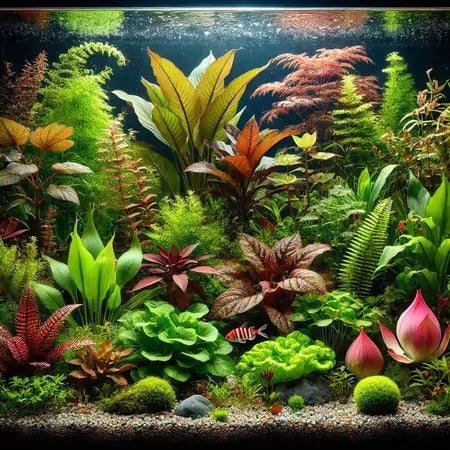
Whether you're setting up your first planted tank or upgrading an established aquarium, live aquarium plants transform your underwater world. They purify water, produce oxygen, provide shelter for fish, and create stunning natural landscapes that no artificial decoration can match.
This comprehensive guide covers everything you need to know about aquarium plants — from choosing the right species to planting, maintaining, and troubleshooting common problems. With 490+ species available, there's a perfect plant for every tank.
Why Add Live Plants to Your Aquarium?
Live aquarium plants aren't just decorative — they're biological powerhouses that improve every aspect of your tank:
- Natural filtration — Plants absorb ammonia, nitrites, and nitrates that are harmful to fish. A heavily planted tank can significantly reduce the need for water changes.
- Oxygen production — Through photosynthesis, plants release oxygen directly into the water, keeping dissolved oxygen levels optimal for fish health.
- Algae prevention — Healthy plants outcompete algae for nutrients and light. A well-planted tank is your best defense against algae outbreaks.
- Fish health & behavior — Plants reduce stress by providing hiding spots, breeding sites, and territory boundaries. Shy fish become more active and colorful in planted tanks.
- Natural aesthetic — Nothing replicates the beauty of a lush planted aquarium. Live plants create depth, movement, and a natural ecosystem that artificial plants simply can't match.
Types of Aquarium Plants
Aquarium plants are categorized by where they grow in the tank and how they're planted. Understanding these categories helps you create a balanced, layered aquascape.
Foreground Plants (Carpet Plants)
These low-growing species create a lush green carpet across the bottom of your tank. Popular choices include:
- Dwarf Hair Grass (Eleocharis parvula) — The classic carpet plant. Creates dense, grass-like lawns in medium to high light.
- Monte Carlo (Micranthemum tweediei) — Easier to carpet than many alternatives. Small round leaves that spread quickly.
- Dwarf Baby Tears (Hemianthus callitrichoides) — The smallest-leaved carpet plant. Stunning but requires CO2 and high light.
- Dwarf Sagittaria (Sagittaria subulata) — Hardy runner plant that carpets without CO2. Perfect for beginners.
Shop all carpet aquarium plants →
Midground Plants
Medium-height plants that fill the middle of your aquascape:
- Anubias varieties — Slow-growing, nearly indestructible epiphytes that attach to rocks and driftwood. Perfect for low-light tanks.
- Java Fern (Microsorum pteropus) — Another hardy epiphyte with beautiful textured leaves. Thrives in almost any condition.
- Cryptocoryne species — Root-feeding plants with diverse leaf shapes and colors. Excellent for midground plantings.
- Bucephalandra — A premium epiphyte from Borneo with metallic, iridescent leaves. The collector's favorite.
Background Plants
Tall-growing species that create a living backdrop:
- Jungle Vallisneria (Vallisneria americana) — Long, ribbon-like leaves that can reach 3+ feet. Creates a flowing, natural background.
- Hornwort (Ceratophyllum demersum) — Fast-growing stem plant that's nearly impossible to kill. Excellent for nutrient absorption.
- Amazon Sword (Echinodorus bleheri) — Large, dramatic rosette plant. A centerpiece species for tanks 20+ gallons.
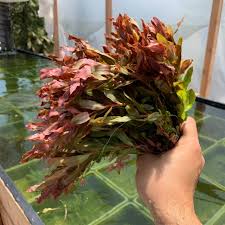
- Rotala varieties — Colorful stem plants that range from green to deep red. Great for adding color to backgrounds.
Floating Plants
Surface-dwelling plants that provide shade and natural filtration:
- Amazon Frogbit (Limnobium laevigatum) — Large round leaves with trailing roots. Fish love hiding in the root systems.
- Red Root Floaters (Phyllanthus fluitans) — Beautiful red-tinged floaters that turn deeper red under high light.
- Salvinia (Salvinia minima) — Small, fast-growing floaters with water-repellent leaves.
- Duckweed (Lemna minor) — The smallest floating plant. Grows explosively fast and is excellent at absorbing excess nutrients.
Shop all floating aquarium plants →
Mosses
Versatile plants that attach to hardscape and create natural textures:
- Java Moss (Taxiphyllum barbieri) — The most popular aquarium moss. Hardy, adaptable, and perfect for shrimp tanks.
- Christmas Moss (Vesicularia montagnei) — Triangle-shaped fronds that resemble tiny Christmas trees. Beautiful on driftwood.
- Flame Moss (Taxiphyllum sp.) — Grows upward in flame-like formations. Unique and eye-catching.
- Subwassertang — Not technically a moss but used similarly. Round, liverwort-like fronds beloved by shrimp keepers.
Choosing Plants for Your Tank
By Lighting Level
Low light (1-2 watts per gallon / under 30 PAR): Anubias, Java Fern, Java Moss, Cryptocoryne, Vallisneria, Hornwort, Amazon Frogbit. These plants thrive without intense lighting and are ideal for beginners.
Medium light (2-3 watts per gallon / 30-50 PAR): Most stem plants, Dwarf Sagittaria, Amazon Sword, Monte Carlo, Rotala, Ludwigia. Good growth with moderate equipment investment.
High light (3+ watts per gallon / 50+ PAR): Dwarf Baby Tears, advanced carpet plants, red-colored stem plants, demanding foreground species. Typically requires CO2 supplementation.
By Experience Level
Beginners: Start with hardy species that forgive mistakes — Java Fern, Anubias, Java Moss, Hornwort, Amazon Frogbit, Vallisneria, and Cryptocoryne wendtii.
Shop beginner-friendly plants →
Intermediate: Try stem plants like Rotala, Ludwigia, and Pearl Weed. Experiment with carpet plants like Dwarf Sagittaria or Monte Carlo.
Advanced: Challenge yourself with Dwarf Baby Tears, Bucephalandra rare varieties, tissue culture plants, and complex aquascaping layouts.
By Fish Species
Not all plants work with all fish. Some considerations:
- Goldfish tanks — Need tough, bitter-tasting plants. Anubias, Java Fern, and Hornwort resist goldfish nibbling. Shop goldfish-safe plants →
- Betta tanks — Bettas love resting on broad leaves and hiding in dense plant cover. Anubias, Java Fern, and floaters are ideal. Shop betta plants →
- Shrimp tanks — Mosses, Subwassertang, and fine-leaved plants provide grazing surfaces and hiding spots for baby shrimp. Shop shrimp tank plants →
- Cichlid tanks — African cichlids dig and uproot plants. Stick with epiphytes attached to rocks — Anubias and Java Fern are cichlid-proof. Shop cichlid-proof plants →
- Turtle tanks — Turtles eat most plants. Hardy, fast-growing species like Hornwort, Anacharis, and Duckweed can outpace turtle appetites. Shop turtle tank plants →
Essential Equipment for Planted Tanks
Lighting
Light is the most important factor for plant growth. LED fixtures designed for planted tanks provide the right spectrum (6500K daylight). Run lights 8-10 hours per day on a timer to prevent algae while giving plants enough energy for photosynthesis.
Substrate
Root-feeding plants need nutrient-rich substrate. Options include:
- Aquasoil (ADA, Fluval Stratum) — Active substrate that lowers pH and provides nutrients. Best for demanding plants.
- Enriched gravel — Regular gravel with root tabs provides a middle-ground option.
- Sand — Fine sand works with root tabs for plants like Vallisneria and Dwarf Sagittaria. See plants for sand →
- No substrate needed — Epiphytes (Anubias, Java Fern, Bucephalandra) and floaters don't need substrate at all. See plants that don't need substrate →
Fertilizers
Plants need macronutrients (nitrogen, phosphorus, potassium) and micronutrients (iron, manganese, etc.). Liquid fertilizers and root tabs supplement what fish waste doesn't provide. In heavily planted tanks, regular fertilization is essential.
CO2 (Optional)
Carbon dioxide supplementation dramatically accelerates plant growth and enables demanding species. However, many beautiful tanks thrive without CO2. See plants that don't need CO2 →
How to Plant Aquarium Plants
Stem Plants
Remove the bottom 1-2 inches of leaves and push the bare stem into the substrate at a slight angle. Plant in groups of 3-5 for a natural look. They'll root within a week.
Rosette Plants
Plant the crown (where stems meet roots) at substrate level — not too deep or the crown will rot, not too shallow or roots will float up. Amazon Swords, Cryptocoryne, and Vallisneria are rosette plants.
Epiphytes
Anubias, Java Fern, and Bucephalandra should NOT be buried in substrate. Attach them to rocks or driftwood using super glue (cyanoacrylate is aquarium-safe) or fishing line. Their rhizome must stay exposed.
Carpet Plants
Separate tissue culture portions into small plugs and plant them 1-2 inches apart in a grid pattern. They'll spread and fill in over 4-8 weeks depending on species and conditions.
Floating Plants
Simply place them on the water surface. Ensure your filter outflow doesn't push them underwater. Some aquarists use airline tubing to create a floating corral that keeps them in one area.
Maintaining Your Planted Tank
Weekly Maintenance
- 25-30% water change with dechlorinated water
- Trim stem plants that reach the surface — cut and replant the tops
- Remove dead or yellowing leaves
- Dose liquid fertilizer after water changes
- Clean filter intake if plant debris is clogging it
Monthly Maintenance
- Replace root tabs every 4-6 weeks in substrate near heavy feeders
- Thin out floating plants if they're blocking too much light
- Propagate overgrown plants — share extras with fellow hobbyists
- Check CO2 levels and adjust if using injection
Troubleshooting Common Plant Problems
Yellowing Leaves
Old leaves turning yellow: Often a nitrogen or iron deficiency. Increase fertilizer dosing. If only the oldest leaves yellow while new growth is healthy, this is normal — old leaves are sacrificed to feed new growth.
Melting
Plants dissolving or turning transparent: Common when plants transition from emersed (above water) to submersed (underwater) growth. Cryptocoryne is notorious for this — called "crypt melt." Don't panic. Leave the roots alone and new submersed leaves will grow within 2-3 weeks.
Algae on Plants
Green fuzz, black beard algae, or hair algae: Usually indicates a light/nutrient imbalance. Reduce lighting duration, increase plant mass, add fast-growing plants to outcompete algae, and consider adding algae-eating invertebrates like Amano shrimp or Nerite snails.
Slow Growth
Plants alive but not growing: Check lighting (most common culprit), fertilization, and CO2 levels. Many plants also take 2-4 weeks to acclimate to a new tank before showing active growth.
Plants Floating Up
Stem plants won't stay planted: Bury them deeper (2+ inches of bare stem in substrate), use plant weights, or let them float until they develop roots — then replant.
Where to Buy Aquarium Plants
When shopping for live aquarium plants online, look for sellers that offer:
- Live Arrival Guarantee — Plants should arrive healthy or you get a replacement
- Wide variety — A large selection means you can find exactly what your tank needs
- Proper packaging — Wet paper towels, insulated boxes, and heat/cold packs for extreme weather
- Pest-free options — Tissue culture plants are guaranteed snail-free and algae-free
At Canton Aquatics, we carry 490+ species of live aquarium plants with a Live Arrival Guarantee on every order. Our plants are carefully packaged and shipped directly to your door.
Browse our full collection of live aquarium plants →
Frequently Asked Questions
Do aquarium plants need soil?
Not all of them. Epiphytes like Anubias, Java Fern, and Bucephalandra attach to rocks and driftwood — they don't use substrate at all. Floating plants sit on the surface. Root-feeding plants like Amazon Swords and Cryptocoryne do best in nutrient-rich substrate.
How many plants do I need for my aquarium?
A good starting point is to plant 60-80% of the available substrate area. More plants mean better filtration, less algae, and a more natural look. For a 20-gallon tank, 15-25 plants is a solid starting point.
Can I grow aquarium plants without CO2?
Absolutely. Many species thrive without CO2 injection — Anubias, Java Fern, Java Moss, Vallisneria, Cryptocoryne, Hornwort, and most floating plants grow beautifully in low-tech setups.
How long do aquarium plants live?
With proper care, most aquarium plants live indefinitely. They propagate through runners, division, or cuttings — so a single plant can produce dozens of offspring over time. Some species like Anubias and Java Fern can live 10+ years.
Are aquarium plants safe for fish?
Yes — live plants are beneficial for fish. They provide oxygen, improve water quality, reduce stress, and offer hiding spots. Just ensure plants from outside sources are quarantined or rinsed to avoid introducing pests.
Do aquarium plants need a heater?
Most tropical aquarium plants prefer water between 72-82°F, which typically requires a heater in most homes. However, cold-water species like Hornwort, Anacharis, and Vallisneria can tolerate temperatures down to the 60s.
Ready to Upgrade Your Aquarium?
Check out our shop for a variety of fresh, farm-grown plants! Find the perfect options to enhance your aquarium today.
FEATURED BLOG
- Choosing a selection results in a full page refresh.

!