


Algae on Fish Tank Glass: Causes, Solutions & Prevention
Discovering algae on fish tank glass is one of the most common frustrations aquarium hobbyists face, whether you're maintaining a planted aquarium or a simple fish-only setup. While some algae growth is normal and even beneficial in small amounts, excessive buildup on viewing panels can obscure your carefully arranged aquascape and indicate underlying water quality issues. Understanding why algae appears, which types you're dealing with, and how to control it effectively transforms tank maintenance from a constant battle into a manageable routine. The good news is that with the right combination of physical removal techniques, biological controls, and preventive measures, you can maintain crystal-clear glass while supporting a healthy ecosystem for your aquatic inhabitants.
Understanding Why Algae Grows on Aquarium Glass
Algae growth on fish tank glass results from an imbalance in the aquarium ecosystem, specifically involving light, nutrients, and biological competition. When excess nutrients like nitrates and phosphates accumulate in the water column, algae spores that are naturally present in every aquarium find ideal conditions to multiply rapidly. These microscopic organisms use photosynthesis to convert light energy into growth, making your well-lit glass panels prime real estate for colonization.
Three primary factors contribute to algae proliferation on glass surfaces:
- Excessive lighting duration or intensity beyond what your plants can utilize
- Nutrient buildup from overfeeding, infrequent water changes, or inadequate filtration
- Insufficient plant mass to compete with algae for available resources
The balance between these elements determines whether you'll see minimal, manageable algae or a thick green coating that requires weekly scraping. Many aquarium keepers don't realize that establishing healthy live aquarium plants creates natural competition that significantly reduces algae growth by consuming the same nutrients and light that algae requires.
Common Types of Algae Found on Glass
Different algae species present distinct appearances and respond to different treatment approaches. Green spot algae appears as small, hard circular dots that require scraping to remove, while green dust algae creates a uniform powdery coating that can cover entire panels within days. Brown diatoms often appear in new tanks or those with silicate-rich water, forming a brownish film that wipes away relatively easily.
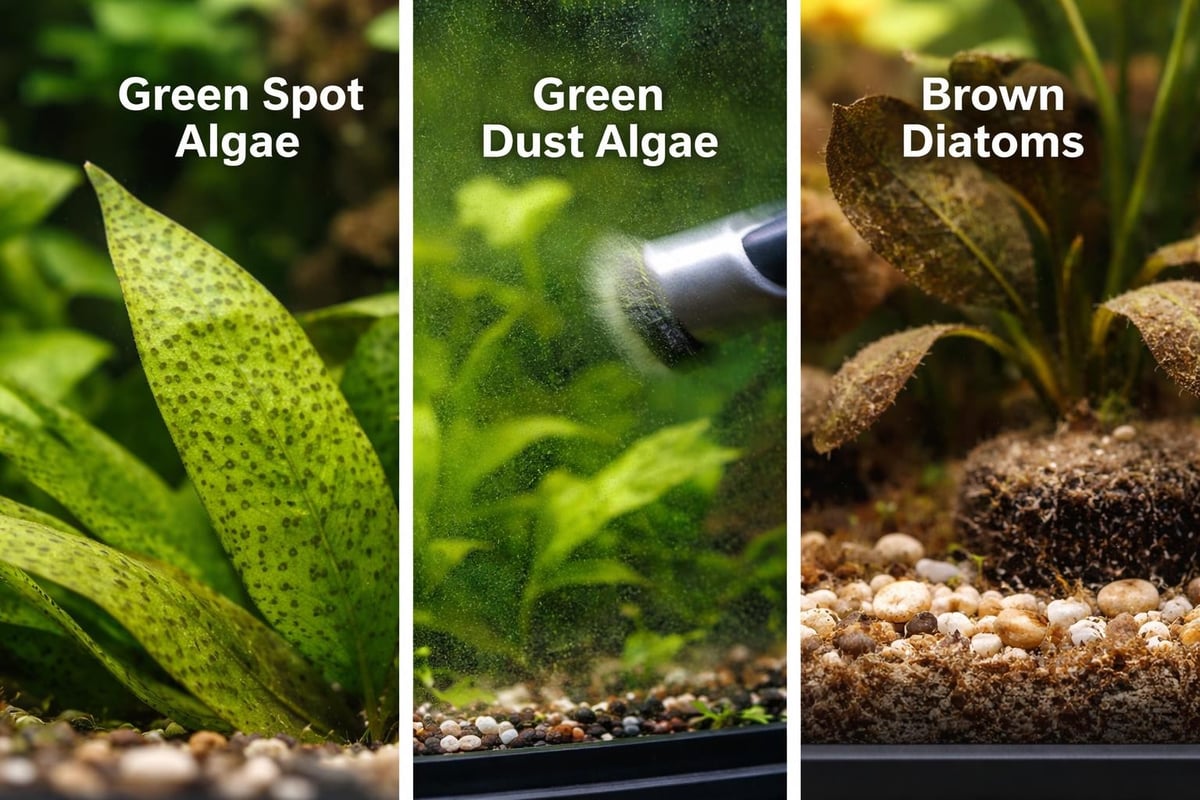
Understanding which algae type you're battling helps determine the most effective removal strategy. Green dust algae, for instance, often indicates an imbalance in the light-to-nutrient ratio, whereas persistent green spot algae typically signals phosphate deficiency rather than excess. This distinction matters because treating the root cause prevents recurrence far more effectively than simply scraping glass repeatedly.
Physical Removal Methods for Tank Glass
Manual removal remains the most immediate and effective solution for algae on fish tank glass, offering instant visual improvement and removing algae biomass from the system entirely. The key is selecting the right tool for your specific tank setup and algae type while avoiding scratches that create rough surfaces where algae can establish more easily.
Recommended Cleaning Tools
| Tool Type | Best For | Advantages | Limitations |
|---|---|---|---|
| Magnetic scraper | Regular maintenance | No wet hands, easy to use | May trap sand particles, scratch risk |
| Razor blade scraper | Stubborn spot algae | Extremely effective on glass | Not safe for acrylic, requires care |
| Credit card/plastic blade | Acrylic tanks | Safe for soft surfaces | Less effective on hard algae deposits |
| Algae scrubbing pad | General cleaning | Gentle, versatile | Requires reaching into tank |
When cleaning algae off tank glass properly, technique matters as much as tool selection. Always move scrapers in consistent vertical or horizontal strokes rather than circular motions, which can trap debris under the blade and cause scratching. For magnetic cleaners, rinse both sides thoroughly before each use to prevent sand grains or substrate particles from becoming embedded in the scrubbing surface.
Professional aquascapers recommend establishing a cleaning routine before algae becomes heavily established. Light weekly maintenance prevents the thick buildup that requires aggressive scraping and potentially damages the glass surface or aquarium silicone seals. Many successful planted tank enthusiasts incorporate glass cleaning into their regular water change schedule, addressing algae before it becomes visually problematic.
Step-by-Step Cleaning Process
- Prepare your workspace by unplugging heaters and being mindful of electrical equipment near water
- Start from the top of the glass panel and work downward, allowing dislodged algae to settle
- Apply firm, consistent pressure using your chosen tool, adjusting as needed for algae resistance
- Wipe or vacuum dislodged algae immediately to remove it from the system
- Inspect closely for any remaining spots and address them before refilling
The dislodged algae particles will cloud your water temporarily, but this settling debris can be removed during your water change or captured by your filtration system. Some aquarists prefer to perform glass cleaning on water change days, allowing them to siphon out the algae waste directly before refilling the tank with fresh, clean water.
Biological Control Through Natural Algae Eaters
Introducing algae-eating organisms creates a self-sustaining cleaning crew that continuously addresses algae on fish tank glass without requiring your intervention. This biological approach works exceptionally well when combined with proper tank balance and occasional manual maintenance, creating a more naturalistic ecosystem that manages itself effectively.
Most Effective Glass-Cleaning Species
Nerite Snails rank among the most efficient algae consumers for glass surfaces, tirelessly grazing on green spot algae, diatoms, and general film algae throughout the day. These attractive invertebrates won't reproduce in freshwater, preventing population explosions while providing consistent cleaning performance. Their distinctive patterns add visual interest while they methodically work across every inch of available glass surface.
Otocinclus Catfish work in small groups to clean both glass and plant leaves, making them ideal for planted aquariums where algae control must balance with plant health. These peaceful, diminutive fish consume soft algae types and biofilm without damaging delicate vegetation or competing aggressively for territory.
Common Plecos grow considerably larger and produce substantial waste, making them better suited for spacious tanks with robust filtration. While effective algae eaters when young, many pleco species reduce their algae consumption as they mature, shifting toward protein-based foods and vegetable matter.
Before adding biological cleaners, consider compatibility with your existing livestock and ensure you can meet their specific dietary and environmental needs. Many algae-eating species require supplemental feeding when natural algae levels decrease, and some have particular water parameter preferences that may not align with all aquarium setups. Canton Aquatics' plant bundles provide the live vegetation these organisms need to thrive alongside your algae control efforts.
Prevention Strategies for Long-Term Control
Preventing algae on fish tank glass proves far more efficient than constantly removing it, requiring adjustments to lighting schedules, feeding practices, and plant density. A well-balanced planted aquarium with appropriate lighting and nutrient levels experiences minimal algae growth because healthy plants outcompete algae for resources.
Optimizing Your Lighting Schedule
Excessive light duration represents one of the most common causes of persistent algae problems in home aquariums. Most tropical plants thrive with 6-8 hours of quality lighting daily, while longer photoperiods simply provide extra energy for algae growth without benefiting plant health. Using a timer ensures consistent light schedules and prevents the common mistake of leaving tank lights on throughout the day.
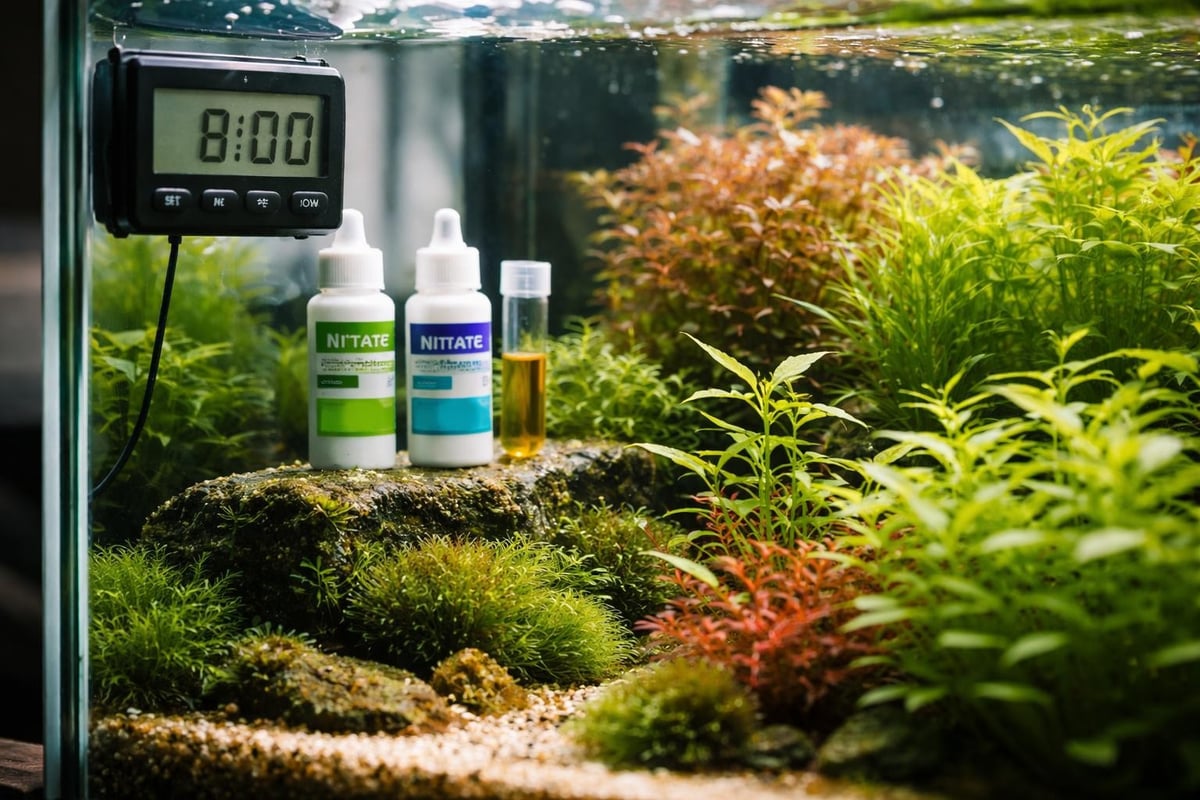
Intensity matters as much as duration, especially in tanks without demanding plant species. Lower light intensity slows algae growth while still supporting hardy plant varieties like anubias and cryptocoryne that thrive in moderate conditions. Consider these lighting adjustments based on your tank's needs:
- Reduce photoperiod to 6 hours if algae persists despite other interventions
- Implement a midday lighting break (siesta method) to disrupt algae photosynthesis
- Dim lights or raise them higher above the tank to decrease intensity
- Replace aging bulbs that have shifted toward algae-promoting spectrums
Nutrient Management and Water Quality
Regular water changes form the foundation of algae prevention by removing accumulated nutrients before algae can utilize them. Weekly changes of 25-30% dilute nitrates, phosphates, and dissolved organic compounds that fuel algae growth while replenishing trace elements essential for plant health.
Feeding discipline prevents the primary source of excess nutrients in most aquariums. Fish should consume all offered food within 2-3 minutes, with any remaining food removed promptly to prevent decomposition and nutrient release. Overfeeding creates a cascade of water quality problems, including ammonia spikes, bacterial blooms, and the persistent algae issues that follow nutrient accumulation.
Testing water parameters reveals imbalances before they manifest as visible algae growth. Monitor these key indicators:
- Nitrates: Should remain below 20 ppm in planted tanks, lower in algae-prone setups
- Phosphates: Trace amounts support plants; excess (above 1-2 ppm) fuels algae
- Silicates: Contribute to diatom growth, especially problematic in new tanks
- Iron and micronutrients: Deficiencies can weaken plants, reducing competitive advantage
Understanding what is growing on the glass of your fish tank helps target specific imbalances rather than implementing random solutions that may worsen the situation.
Maximizing Plant Competition Against Algae
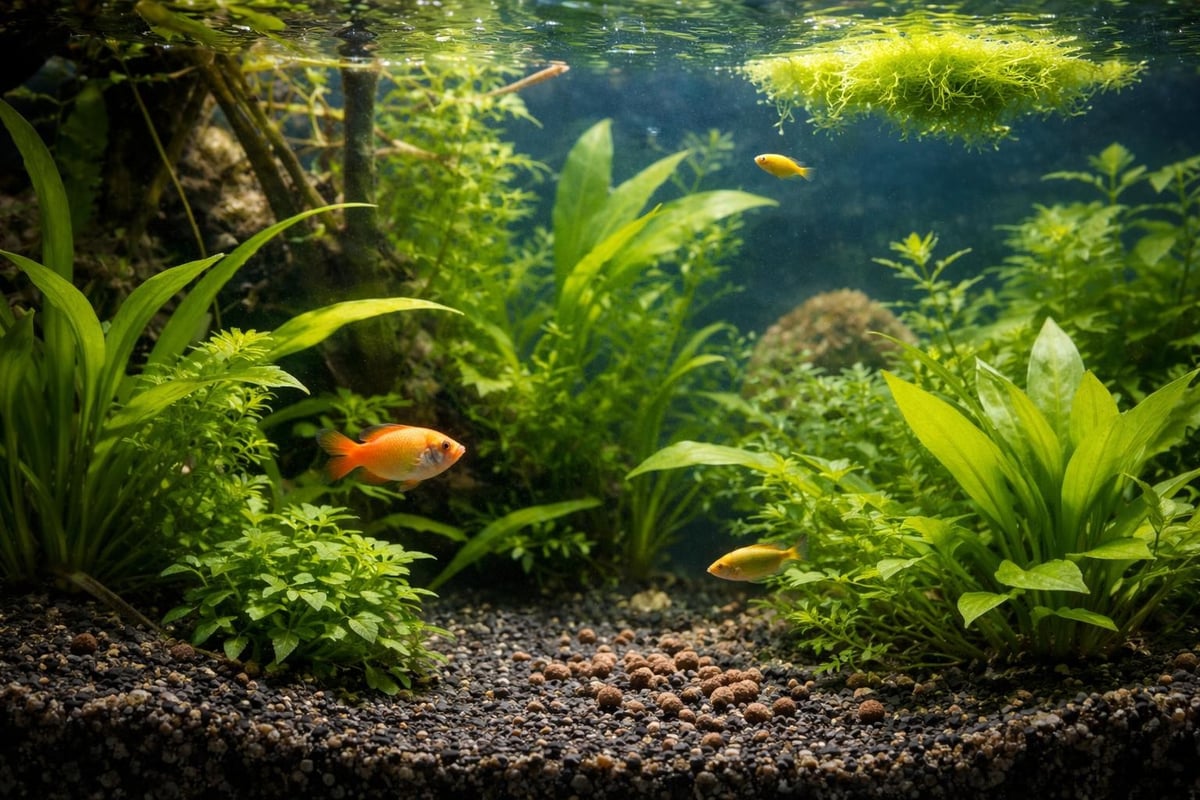
Dense, healthy plant growth represents your strongest defense against algae on fish tank glass, as thriving vegetation consumes available nutrients and light before algae can access them. This competitive exclusion works so effectively that heavily planted aquariums often require minimal glass cleaning despite receiving substantial light and fertilization.
Selecting Fast-Growing Plant Species
Floating plants like red root floaters and water sprite excel at nutrient absorption while shading the water column, reducing light availability for algae growth on lower glass surfaces. These surface dwellers extract nutrients directly from the water, processing nitrates and phosphates before they accumulate to problematic levels. Red root floaters particularly shine in this role, combining rapid growth with attractive coloration that enhances overall aquascape aesthetics.
Stem plants provide substantial biomass that processes nutrients quickly, making them ideal for newly established tanks or systems recovering from algae outbreaks. Species like anacharis grow vigorously in most conditions, adapting to various light levels while continuously removing dissolved nutrients from the water column.
Background plants such as vallisneria and amazon swords develop extensive root systems that process nutrients from the substrate while their tall growth intercepts light that might otherwise reach algae-prone surfaces.
Aquascapers building new planted displays should prioritize plant density from the start, filling at least 70% of the available space with fast-growing species during the initial establishment phase. This approach, sometimes called the "heavy planting method," prevents algae from gaining a foothold during the vulnerable cycling period when plants are still developing their root systems and growth patterns.
Fertilization Balance for Plant Health
Healthy plants resist algae better than struggling vegetation, making proper fertilization essential for algae control rather than a contributor to algae problems. The key is matching nutrient input to plant consumption, avoiding both deficiency and excess that creates imbalances favoring algae growth.
Consider implementing the Estimative Index (EI) dosing method or similar fertilization schedules that provide consistent nutrient availability without accumulation. Regular dosing paired with weekly water changes maintains stable levels that support robust plant growth while preventing the nutrient spikes that trigger algae blooms. Many successful aquarists find that improving water quality with live aquatic plants creates a self-regulating system requiring minimal intervention once properly balanced.
Advanced Solutions for Persistent Problems
When basic maintenance and biological controls fail to resolve algae on fish tank glass, advanced approaches address underlying issues that standard methods cannot correct. These interventions require more effort or investment but often provide the breakthrough needed for chronically problematic tanks.
Blackout Treatment and Chemical Controls
A three-day blackout period can reset severe algae infestations by depriving photosynthetic organisms of light while most plants survive the temporary darkness. Cover the tank completely with blankets or plastic sheeting, maintaining normal feeding and filtration but eliminating all light sources. This aggressive approach works particularly well against free-floating algae and certain film types, though it should be reserved for severe cases as it stresses both plants and fish.
Chemical algaecides offer quick results but carry significant risks including oxygen depletion, pH swings, and harm to beneficial bacteria or invertebrates. If using these products, follow dosing instructions precisely and increase aeration substantially. Most experienced aquarists view chemical controls as last resorts, preferring biological and mechanical solutions that address root causes rather than symptoms.
Hydrogen peroxide spot treatment provides targeted control for isolated algae patches without systemic risks. Using a syringe, apply 3% hydrogen peroxide directly to affected areas during water changes, allowing the oxidizing action to break down algae cells. This method works exceptionally well for stubborn green spot algae or beard algae that mechanical removal cannot eliminate.
Equipment Upgrades and System Modifications
Enhanced filtration removes dissolved organic compounds that contribute to algae growth while providing superior mechanical filtration for particulate matter. Canister filters with multiple media stages or sump systems offer greater biological capacity and customization options compared to basic hang-on-back filters, supporting cleaner water chemistry that favors plants over algae.
UV sterilizers eliminate free-floating algae spores and can prevent green water outbreaks, though they don't address algae already attached to surfaces. These devices work best as preventive measures in tanks prone to algae blooms rather than solutions for existing glass coverage. Consider UV sterilization if you've resolved current algae issues but want insurance against future outbreaks.
CO2 injection supercharges plant growth in moderate to high light setups, tipping the competitive balance heavily toward vegetation and away from algae. While requiring investment and careful management, pressurized CO2 systems enable robust plant growth that naturally suppresses algae through nutrient depletion and allelopathic compounds some plants release. Many aquascaping enthusiasts find that adding CO2 transforms chronically algae-plagued tanks into thriving planted displays.
Maintenance Schedules for Algae-Free Glass
Consistency prevents algae from establishing the foothold needed for visible growth, making regular maintenance far more effective than sporadic intensive cleaning sessions. Developing a sustainable routine matched to your tank's specific needs ensures long-term success without overwhelming time commitments.
Weekly Maintenance Tasks
- Clean front glass panel with magnetic scraper or blade
- Perform 25-30% water change with substrate vacuuming
- Trim fast-growing plants and remove dead leaves
- Test water parameters and adjust fertilization as needed
- Check and clean filter intake straws and spray bars
Monthly Maintenance Tasks
- Deep clean all glass panels including sides and back
- Inspect and clean filter media, replacing as necessary
- Trim and reorganize plants, removing excess growth
- Assess algae-eating crew effectiveness and population
- Evaluate lighting schedule and intensity for optimization
This structured approach, detailed in various algae removal methods, prevents the overwhelming algae growth that discourages many aquarium hobbyists. Rather than fighting massive algae blooms, consistent maintenance addresses minor growth before it becomes problematic.
Managing algae on fish tank glass requires understanding the biological factors that drive growth and implementing preventive strategies that create natural balance within your aquarium ecosystem. By combining regular maintenance, appropriate plant selection, and biological controls, you can maintain crystal-clear viewing panels while supporting a thriving aquatic environment. Canton Aquatics provides the high-quality live plants and expert resources you need to establish densely planted aquariums that naturally resist algae growth, backed by farm-direct quality and a live arrival guarantee that ensures your plants arrive ready to compete with algae from day one.
Ready to Upgrade Your Aquarium?
Check out our shop for a variety of fresh, farm-grown plants! Find the perfect options to enhance your aquarium today.
FEATURED BLOG
Dwarf Cardinal Plant Care Guide: Lobelia Cardinalis for Planted Aquariums


July 14, 2026
Dwarf Cardinal Plant Care Guide: Lobelia Cardinalis for Planted Aquariums
Aquarium Plants That Don't Need Substrate: Epiphytes, Floaters & Column Feeders


July 1, 2026
Aquarium Plants That Don't Need Substrate: Epiphytes, Floaters & Column Feeders
Best Pressurized CO2 Systems for Planted Aquariums: 2026 Buyer's Guide


July 1, 2026
Best Pressurized CO2 Systems for Planted Aquariums: 2026 Buyer's Guide
Going on Vacation? How to Keep Your Planted Tank Alive While You're Away


July 1, 2026
Going on Vacation? How to Keep Your Planted Tank Alive While You're Away
How Long Can Aquarium Plants Survive Without Light?


July 1, 2026
How Long Can Aquarium Plants Survive Without Light?
Best Aquarium Plants for Rainbowfish: Colorful Tank Setup Guide


July 1, 2026
Best Aquarium Plants for Rainbowfish: Colorful Tank Setup Guide
- Choosing a selection results in a full page refresh.

!