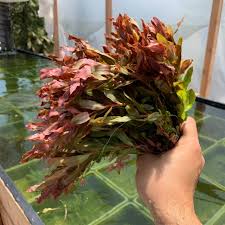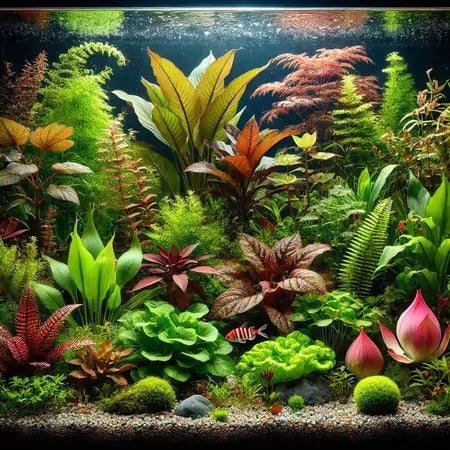


The Dwarf Cardinal Plant (Lobelia cardinalis) is one of the most underrated stem plants in the freshwater aquarium hobby. Native to North America, this compact grower delivers something rare: vivid color contrast without demanding high-tech equipment. Its bright green leaf tops and striking reddish-purple undersides create natural visual depth in any planted tank — and its slow, controlled growth means you won't be trimming every week.
Care Requirements at a Glance
| Parameter | Recommendation |
|---|---|
| Scientific Name | Lobelia cardinalis (dwarf form) |
| Common Names | Dwarf Cardinal Plant, Cardinal Flower (aquatic form) |
| Difficulty | Easy to Moderate |
| Lighting | Moderate to High |
| Water Temperature | 68–82°F (20–28°C) |
| pH Range | 6.0–7.5 |
| Hardness | Soft to Moderately Hard |
| Placement | Foreground, Midground, or Background (depending on tank size) |
| Growth Rate | Slow to Moderate |
| CO₂ | Not required (enhances growth and color) |
| Substrate | Nutrient-rich substrate recommended |
| Propagation | Stem cuttings |
What Makes Dwarf Cardinal Special?
Most stem plants grow fast — sometimes too fast. Rotala, Ludwigia, and Hygrophila can shoot up inches per week, demanding constant trimming to keep an aquascape looking clean. Dwarf Cardinal is different. It grows at a controlled, deliberate pace, forming tidy bush-like clusters that hold their shape without aggressive maintenance.
The real showstopper is the color contrast. The upper leaf surface stays bright, healthy green while the undersides develop rich reddish-purple tones — especially under moderate to high lighting. When you look at a mature Dwarf Cardinal bush from any angle other than directly above, you see both colors at once, creating a natural gradient that few other plants can match.
Lighting
Moderate to high lighting brings out the best in Lobelia cardinalis. Under stronger light:
- Growth stays compact and bushy — shorter internodes mean a denser plant
- The red/purple undersides intensify, giving you more color contrast
- The plant produces more side shoots, filling out naturally
Under low light, Dwarf Cardinal will still survive and grow, but expect:
- Leggier growth with longer gaps between leaf pairs
- Less vivid underside coloration (more green than red)
- Slower side shoot production
If you're running a low-tech tank, Dwarf Cardinal still works — it just won't reach its full visual potential. For the best results, aim for PAR values of 50–100+ µmol at the substrate level.
Water Conditions
Dwarf Cardinal is adaptable to a wide range of freshwater conditions:
- Temperature: 68–82°F (20–28°C) — comfortable in tropical and subtropical setups
- pH: 6.0–7.5 — slightly acidic to neutral is ideal
- Hardness: Soft to moderately hard — not demanding about GH/KH
This flexibility makes it compatible with most community tank setups. Whether you keep tetras in soft acidic water or livebearers in harder, more alkaline conditions, Dwarf Cardinal adjusts without complaint.
Substrate and Planting
Plant Dwarf Cardinal stems directly into a nutrient-rich substrate like aqua soil, enriched gravel, or inert substrate supplemented with root tabs. The plant feeds through both roots and the water column, but a quality substrate gives it a noticeable advantage in growth form and color.
Planting Tips
- Push each stem 1–2 inches into the substrate, leaving at least 2–3 leaf pairs above the surface
- Space stems about 1–1.5 inches apart — they'll fill in over time as side shoots develop
- Plant in groups of 3–5+ stems for immediate visual impact
- Remove any leaves that would be buried in the substrate to prevent decay
Where to Place It
Placement depends on your tank size:
- Nano tanks (5–10 gallons): Background plant — it will grow tall enough to fill the back
- Medium tanks (20–40 gallons): Midground — creates a beautiful structured focal point
- Large tanks (55+ gallons): Foreground or midground accent — its compact form works well against taller background plants
CO₂ and Fertilization
CO₂ injection is not required but makes a real difference with this plant. With CO₂:
- Growth is noticeably faster and more compact
- Leaf coloration intensifies — brighter green tops, deeper red/purple undersides
- The plant produces more side shoots, creating a fuller bush shape
Without CO₂, Dwarf Cardinal still grows and looks good — it's just slower and slightly less vivid. It's one of the better stem plants for low-tech setups precisely because it doesn't require CO₂ to look presentable.
Fertilization: Regular dosing with a comprehensive liquid fertilizer supports healthy foliage. If you notice pale or yellowing leaves, increase iron and micronutrient dosing. Root tabs complement liquid fertilizers well since this plant feeds through both roots and the water column.
Trimming and Propagation
One of the biggest advantages of Dwarf Cardinal is its low maintenance trimming schedule. While fast-growing stems like Rotala or Hornwort need weekly trimming, Lobelia cardinalis only needs attention every 2–4 weeks depending on your lighting and CO₂ setup.
How to Trim
- Use sharp aquascaping scissors to cut the stem at the desired height
- The cut stem will produce new side shoots from the remaining leaf nodes, creating a bushier plant
- Replant the trimmed tops directly into the substrate — they'll root within a week or two
Propagation
Propagation is straightforward: every trimmed top becomes a new plant. Cut a healthy stem with at least 3–4 leaf pairs and plant it into the substrate. It will develop roots within 1–2 weeks and begin growing independently. This is how you fill in a section of your tank — each trim doubles your plant count.
The Emersed-to-Submersed Transition
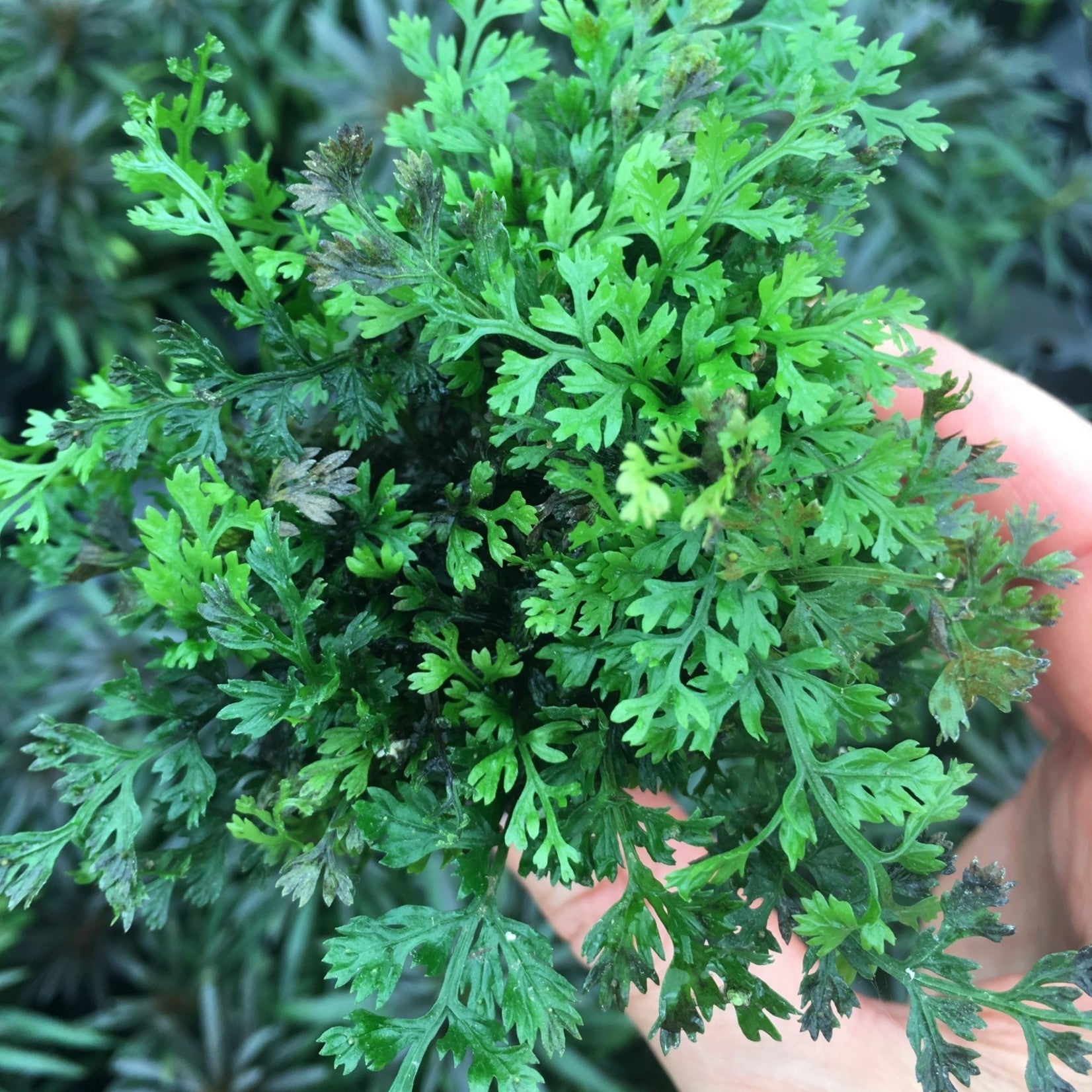
Here's something every new Dwarf Cardinal owner should know: this plant is almost always grown emersed (above water) at the farm. The emersed leaves are rounder, thicker, and often slightly different in color from the submersed (underwater) form.
When you first plant it in your aquarium, expect a transition period:
- Some emersed leaves may melt, turn translucent, or fall off — this is completely normal
- New submersed growth will emerge from the stem within 1–2 weeks
- The new underwater leaves will be thinner, more elongated, and show the classic green-top/red-underside coloration
Don't panic during this transition. As long as the stem is firm and the crown is healthy, the plant is alive and adapting. Resist the urge to pull it out or move it — let it settle in.
Common Issues and Troubleshooting
Yellowing Leaves
Usually a nutrient deficiency — most commonly iron or nitrogen. Increase liquid fertilizer dosing and consider adding root tabs if you're using an inert substrate.
Leggy, Stretched Growth
Not enough light. The plant is reaching upward trying to get closer to the light source. Increase your lighting intensity or duration (8–10 hours per day is ideal).
Melting Leaves on New Plants
Normal emersed-to-submersed transition (see above). Wait 1–2 weeks for new underwater growth.
Slow or Stalled Growth
This plant grows slowly by nature, but if growth has completely stalled, check your water parameters and nutrient levels. Adding CO₂ or increasing fertilizer dosing usually gets things moving again.
Algae on Leaves
Reduce lighting duration (not intensity) and ensure good water circulation. Dwarf Cardinal's slower growth makes it slightly more susceptible to algae than fast-growing stems, so keep nutrient levels balanced and avoid excess light.
Tank Mates and Compatibility
Dwarf Cardinal is completely safe for community aquariums. It pairs well with:
- Fish: Tetras, rasboras, bettas, guppies, corydoras, angelfish — all community-safe species
- Invertebrates: Cherry shrimp, Amano shrimp, nerite snails — all safe and beneficial
- Other plants: Anubias, Cryptocoryne, Java Fern, Bucephalandra, and other slow-to-moderate growers complement it well. It also contrasts beautifully with fine-leaved plants like Rotala or Pogostemon
Avoid housing with plant-eating fish like large cichlids, goldfish, or silver dollars, which may damage the leaves.
Emersed Growing and Flowering
Fun fact: Lobelia cardinalis is famous outside the aquarium hobby as a wildflower. When grown emersed (above water or in a paludarium), it produces stunning bright red tubular flowers on tall spikes. These flowers are a hummingbird magnet in outdoor settings.
In a fully submerged aquarium, the plant will not flower. But if you have a paludarium, riparium, or open-top tank where the stems can grow above the waterline, you may be rewarded with blooms.
Why We Recommend Dwarf Cardinal
If you're looking for a stem plant that delivers color, structure, and low maintenance — Dwarf Cardinal checks every box. It's forgiving enough for beginners, versatile enough for aquascapers, and visually interesting enough to be a focal point in any planted tank. The slow growth rate means less work for you, and the color contrast means more impact in your aquascape.
Frequently Asked Questions
Is Dwarf Cardinal Plant easy to grow?
Yes. It's one of the more forgiving stem plants available. It tolerates a range of lighting and water conditions, doesn't require CO₂, and grows slowly enough that maintenance is minimal.
Does Dwarf Cardinal need CO₂?
No — it grows fine without CO₂. However, CO₂ supplementation significantly improves growth rate, compactness, and leaf coloration.
How fast does Dwarf Cardinal grow?
Slowly compared to most stem plants. Expect roughly 0.5–1 inch of new growth per week under moderate light with CO₂. Without CO₂, even slower — which is actually an advantage for low-maintenance tanks.
Is Dwarf Cardinal safe for shrimp?
Absolutely. It's 100% shrimp-safe. The dense bush form provides excellent grazing surfaces and shelter for baby shrimp.
Why are my Dwarf Cardinal leaves melting?
If you just planted it, this is the normal emersed-to-submersed transition. The old above-water leaves melt while new underwater growth develops. Give it 1–2 weeks.
Can I grow Dwarf Cardinal in a low-light tank?
Yes, but growth will be leggier and the red/purple coloration on the undersides will be less vivid. For the best appearance, moderate to high light is recommended.
🌿 Browse more: Stem Plants · All Aquarium Plants
📖 More care guides: Stem Plants: Essential Guide for Aquarium Success