


Best Live Plants for Turtle Tanks: Safe & Hardy Species
Finding the best live plants for turtle tanks can be challenging — turtles are notorious for eating, uprooting, and destroying aquarium plants. But the right species can survive and even thrive alongside your shelled friend, providing natural filtration, oxygen, and a more enriching habitat.
After years of customer feedback from turtle keepers, we've identified the hardiest plants that stand up to turtle abuse — and which ones to avoid entirely.
Why Add Live Plants to a Turtle Tank?
- Natural filtration: Live plants absorb ammonia and nitrates, helping offset turtles' heavy bioload
- Supplemental food: Many turtles benefit from nibbling on plants — it's natural foraging behavior
- Hiding spots: Dense plantings give shy turtles and tank mates places to retreat
- Algae control: Plants compete with algae for nutrients, keeping water cleaner
- Enrichment: A planted tank stimulates more natural behaviors than a bare setup
The 8 Best Live Plants for Turtle Tanks
1. Anubias (Best Overall)
Survival Rating: ⭐⭐⭐⭐⭐ | Light: Low-Medium | Turtle-Proof: Excellent
Anubias is the #1 plant for turtle tanks. Its thick, leathery leaves are too tough for most turtles to eat, and since it attaches to rocks and driftwood (not planted in substrate), turtles can't uproot it. Anubias Barteri and Anubias Nana are the best varieties for turtle setups.
Pro tip: Wedge Anubias between rocks or zip-tie to heavy driftwood so turtles can't knock it loose.
2. Java Fern
Survival Rating: ⭐⭐⭐⭐⭐ | Light: Low-Medium | Turtle-Proof: Excellent
Java Fern is nearly indestructible. Like Anubias, it grows attached to hardscape rather than rooted in substrate, making it impossible for turtles to uproot. The leaves have a bitter taste that discourages nibbling. The Windelov (lace) and Narrow Leaf varieties add beautiful texture.
3. Hornwort (Best Floating Option)
Survival Rating: ⭐⭐⭐⭐ | Light: Low-High | Turtle-Proof: Good (grows faster than they eat)
Hornwort is the ultimate "sacrificial plant" — turtles will nibble on it, but it grows so fast (up to 5 inches per week) that it typically outpaces the damage. Float it at the surface or weight it down. Even if your turtle eats some, it's nutritious and safe. Just keep adding more as needed.
4. Java Moss
Survival Rating: ⭐⭐⭐⭐ | Light: Low | Turtle-Proof: Good
Java Moss clings to rocks and driftwood, making it difficult for turtles to destroy completely. Even if pieces break off, they'll reattach and grow elsewhere. It provides excellent hiding spots for any fish in the turtle tank and creates a natural look.
5. Amazon Frogbit (Best Surface Plant)
Survival Rating: ⭐⭐⭐ | Light: Medium-High | Turtle-Proof: Moderate
Amazon Frogbit floats on the surface where turtles can reach it, but it multiplies so quickly that it's hard to wipe out entirely. Its trailing roots provide grazing surfaces and help absorb nutrients. Best for tanks with a turtle basking area that keeps them away from plants part of the time.
6. Duckweed (The Expendable Option)
Survival Rating: ⭐⭐⭐ | Light: Any | Turtle-Proof: Moderate (grows explosively)
Duckweed is both food and filter. Turtles love eating it, and it reproduces so fast that a small portion can repopulate the entire surface within days. Think of it as a self-renewing salad bar that also filters your water. Not pretty, but extremely functional.
7. Vallisneria (Best Background Plant)
Survival Rating: ⭐⭐⭐ | Light: Medium | Turtle-Proof: Moderate
Vallisneria's grass-like leaves are tough enough that most turtles ignore them. It sends out runners quickly, so even if turtles uproot some, new plants keep appearing. Plant it deeply in substrate and it creates a beautiful grass-like wall in the background.
8. Water Sprite
Survival Rating: ⭐⭐⭐ | Light: Medium | Turtle-Proof: Moderate
Water Sprite grows rapidly and can be floated or planted. While turtles may munch on it, the fast growth rate helps it recover. It also produces daughter plants on its leaves, naturally replacing any that get destroyed.
Plants to AVOID in Turtle Tanks
Some popular aquarium plants are poor choices for turtle tanks:
- Dwarf Hairgrass / Monte Carlo: Immediately uprooted by digging turtles
- Bucephalandra: Too slow-growing and expensive to risk — turtles will eventually destroy them
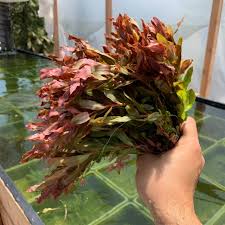
- Red plants (AR Mini, Rotala): Delicate, require CO2, and turtles will shred them
- Dwarf Baby Tears (HC Cuba): Requires high light + CO2 and will be destroyed instantly
Setup Tips for Planted Turtle Tanks
- Attach plants to heavy hardscape: Rocks and driftwood that turtles can't move
- Use a plant refuge: A mesh barrier or separate planted section the turtle can't access
- Overstock plants: Start with more plants than you think you need — turtles will thin them naturally
- Choose your battles: Focus on tough species and accept some plant loss as normal
- Extra filtration: Turtles produce 3-5x more waste than fish — heavier filtration is essential
🌿 Shop Turtle-Safe Plants at Canton Aquatics
Ready to plant your turtle tank? Canton Aquatics ships 500+ species of live aquarium plants with our Live Arrival Guarantee.
Free shipping on orders over $50. Most orders ship within 1-2 business days.
Frequently Asked Questions
Will turtles eat live aquarium plants?
Yes, most turtles will nibble on plants to some degree. However, some species like Anubias and Java Fern have tough, bitter-tasting leaves that turtles generally leave alone. Fast-growing plants like Hornwort and Duckweed can outgrow the damage.
Are live plants safe for turtles?
Most common aquarium plants are completely safe for turtles to eat. Anubias, Java Fern, Hornwort, Duckweed, and Water Sprite are all non-toxic. Avoid terrestrial houseplants or anything not sold specifically for aquarium use.
What's the hardiest plant for a turtle tank?
Anubias Barteri is widely considered the hardiest plant for turtle tanks. Its thick, leathery leaves are too tough to eat, it attaches to rocks so it can't be uprooted, and it thrives in low light — perfect for the often poorly-lit conditions in turtle enclosures.
Ready to Upgrade Your Aquarium?
Check out our shop for a variety of fresh, farm-grown plants! Find the perfect options to enhance your aquarium today.
FEATURED BLOG
Dwarf Cardinal Plant Care Guide: Lobelia Cardinalis for Planted Aquariums


July 14, 2026
Dwarf Cardinal Plant Care Guide: Lobelia Cardinalis for Planted Aquariums
Aquarium Plants That Don't Need Substrate: Epiphytes, Floaters & Column Feeders


July 1, 2026
Aquarium Plants That Don't Need Substrate: Epiphytes, Floaters & Column Feeders
Best Pressurized CO2 Systems for Planted Aquariums: 2026 Buyer's Guide


July 1, 2026
Best Pressurized CO2 Systems for Planted Aquariums: 2026 Buyer's Guide
Going on Vacation? How to Keep Your Planted Tank Alive While You're Away


July 1, 2026
Going on Vacation? How to Keep Your Planted Tank Alive While You're Away
How Long Can Aquarium Plants Survive Without Light?


July 1, 2026
How Long Can Aquarium Plants Survive Without Light?
Best Aquarium Plants for Rainbowfish: Colorful Tank Setup Guide


July 1, 2026
Best Aquarium Plants for Rainbowfish: Colorful Tank Setup Guide
- Choosing a selection results in a full page refresh.

!