


Best Red Aquarium Plants: 12 Stunning Species for a Colorful Planted Tank
Why Red Plants Are the Crown Jewels of Aquascaping
Nothing transforms a planted tank like red plants. That contrast of deep crimson, fiery orange, and wine-purple against lush greens creates the kind of aquascape people photograph and share. But red plants have a reputation for being difficult — and while some are, many are surprisingly manageable if you understand what drives red coloration.
What Makes Aquarium Plants Turn Red?
Red coloration in aquarium plants comes from anthocyanin pigments — the same compounds that make autumn leaves red. Plants produce more anthocyanins under specific conditions:
- High light intensity — the #1 factor. More light = more red.
- Iron supplementation — iron is directly involved in anthocyanin production
- Nitrate limitation — lower nitrogen levels encourage red pigment (but too low causes deficiency)
- CO2 injection — helps some species express full red color (but not all need it)
12 Best Red Aquarium Plants (Ranked by Difficulty)
🟢 Beginner-Friendly Red Plants
1. Ludwigia Repens
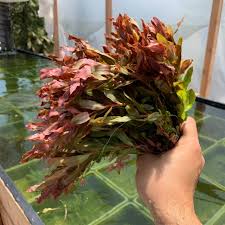
The easiest red plant in the hobby. Under moderate light, the tops of Ludwigia Repens turn a beautiful red-orange while the undersides stay green. It doesn't require CO2, grows in most substrates, and propagates easily from cuttings. If you can only try one red plant — start here.
CO2: Optional | Light: Medium-High | Difficulty: Easy
2. Alternanthera Reineckii
Deep magenta-red leaves that provide intense color even without CO2. AR grows slowly, which means less trimming. The 'Mini' variety stays compact and works well in smaller tanks. Feed with root tabs for best color.
CO2: Optional (better with) | Light: Medium-High | Difficulty: Easy-Moderate
3. Ludwigia Super Red
An intensely red variety that keeps its color more consistently than standard Ludwigia Repens. The entire leaf blade turns crimson under good light. One of the most photogenic plants in the hobby.
CO2: Optional | Light: Medium-High | Difficulty: Easy
4. Red Root Floater (Phyllanthus fluitans)
A floating plant that turns red from above — unique because most red plants are stem plants. Under strong light, the round leaves develop stunning red coloration. Easy to grow, no planting required.
CO2: Not needed (gets CO2 from air) | Light: High | Difficulty: Easy
🟡 Intermediate Red Plants
5. Rotala Rotundifolia
Under high light and CO2, this plant transforms from green to pink-red. It grows fast and creates stunning backgrounds when planted in dense groups. The 'H'ra' and 'Blood Red' varieties are even more intensely colored.
CO2: Recommended | Light: High | Difficulty: Moderate
6. Ludwigia Arcuata
Needle-like leaves that turn copper to red under strong light. Creates a wispy, delicate texture different from broad-leaved red plants. Grows quickly and needs regular trimming.
CO2: Recommended | Light: High | Difficulty: Moderate
7. Hygrophila Polysperma 'Rosanervig'
Also called Sunset Hygro — green leaves with pink-white veining that looks almost painted. One of the most unique color patterns in the planted tank world. Grows fast and easy but needs good light for the best color expression.
CO2: Optional | Light: Medium-High | Difficulty: Moderate
8. Tiger Lotus (Nymphaea zenkeri)
A bulb plant with dramatic spotted red-brown leaves. Tiger Lotus can grow large and produces lily pads at the surface if allowed. Trim the runners to keep it compact. Striking as a midground focal point.
CO2: Optional | Light: Medium-High | Difficulty: Moderate
🔴 Advanced Red Plants
9. Rotala Macrandra
The most intensely red aquarium plant — but also one of the most demanding. Rotala Macrandra needs high light, CO2, consistent fertilization, and stable parameters. When everything clicks, it's breathtaking.
CO2: Required | Light: Very High | Difficulty: Advanced
10. Proserpinaca Palustris (Mermaid Weed)
Unique serrated leaves that turn golden-orange to deep red. The leaf shape changes dramatically between emersed and submerged growth. A statement plant that draws the eye.
CO2: Required | Light: High | Difficulty: Advanced
11. Ludwigia Pantanal
Large, diamond-shaped leaves in deep red. Native to Brazilian wetlands. Requires excellent conditions but rewards with one of the most vivid red displays in aquascaping.
CO2: Required | Light: Very High | Difficulty: Advanced
12. Ammania Gracilis
Broad, copper-to-crimson leaves on sturdy stems. A bold plant that makes a statement in the midground. Demanding but not as finicky as Rotala Macrandra.
CO2: Required | Light: High | Difficulty: Advanced
How to Get the Reddest Color
- Increase light intensity — this is the single biggest factor. If your reds look washed out, your light isn't strong enough.
- Supplement iron — dose iron-rich fertilizer 2-3x per week
- Consider CO2 — even a small CO2 system dramatically improves red coloration
- Moderate your nitrogen — keep nitrates around 5-10 ppm rather than 20+
- Use nutrient-rich substrate — especially for root-feeding species like Alternanthera and swords
Shop Red Plants at Canton Aquatics
We stock a rotating selection of red aquarium plants — from beginner-friendly Ludwigia to rare Rotala varieties. All plants ship fresh with our live arrival guarantee. Browse red plants now →
Ready to Upgrade Your Aquarium?
Check out our shop for a variety of fresh, farm-grown plants! Find the perfect options to enhance your aquarium today.
FEATURED BLOG
Dwarf Cardinal Plant Care Guide: Lobelia Cardinalis for Planted Aquariums


July 14, 2026
Dwarf Cardinal Plant Care Guide: Lobelia Cardinalis for Planted Aquariums
Aquarium Plants That Don't Need Substrate: Epiphytes, Floaters & Column Feeders


July 1, 2026
Aquarium Plants That Don't Need Substrate: Epiphytes, Floaters & Column Feeders
Best Pressurized CO2 Systems for Planted Aquariums: 2026 Buyer's Guide


July 1, 2026
Best Pressurized CO2 Systems for Planted Aquariums: 2026 Buyer's Guide
Going on Vacation? How to Keep Your Planted Tank Alive While You're Away


July 1, 2026
Going on Vacation? How to Keep Your Planted Tank Alive While You're Away
How Long Can Aquarium Plants Survive Without Light?


July 1, 2026
How Long Can Aquarium Plants Survive Without Light?
Best Aquarium Plants for Rainbowfish: Colorful Tank Setup Guide


July 1, 2026
Best Aquarium Plants for Rainbowfish: Colorful Tank Setup Guide
- Choosing a selection results in a full page refresh.

!