


How to Trim Aquarium Plants: The Complete Guide to Pruning
Trimming your aquarium plants isn't just about keeping things tidy — it's one of the most important maintenance tasks for a healthy planted tank. Proper pruning encourages bushier growth, prevents light-blocking overgrowth, removes dying tissue before it decays, and keeps your aquascape looking sharp.
But different plant types require completely different trimming approaches. Cut a stem plant wrong and it bounces back in days. Cut a rhizome plant wrong and you might kill it. This guide covers every major plant category and exactly how to trim each one.
Essential Trimming Tools
Before you start cutting, invest in the right tools. Kitchen scissors and your fingers won't cut it (pun intended) — they crush stems instead of cutting cleanly, which promotes decay and bacterial infection at the cut site.
- Curved aquascaping scissors — the single most important tool. The curve lets you reach into the tank and make precise cuts at any angle without disturbing nearby plants.
- Straight trimming scissors — best for carpet plants where you need to trim flat across the top.
- Long tweezers/forceps — for replanting trimmed cuttings and removing loose clippings from the water.
- A fine net — scoop floating trimmings before they clog your filter.
How to Trim Stem Plants
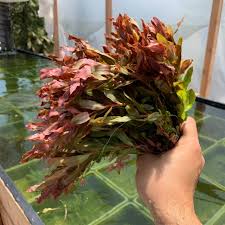
Stem plants like Ludwigia, Rotala, Bacopa, Cabomba, and Hornwort are the easiest plants to trim — and the most forgiving.
The Basic Method
- Cut the stem at whatever height you want. Cut just above a leaf node (where leaves attach to the stem) for the cleanest result.
- The bottom portion stays planted and will sprout 2–3 new side shoots from the highest remaining leaf nodes within a week.
- The top cutting can be replanted directly into the substrate — it will grow new roots within days.
When to Trim
Trim stem plants when they reach the water surface or start blocking light from plants below. Most fast-growing stems need trimming every 1–2 weeks. If you let them grow too long, the lower portions become bare and leggy as light can't penetrate the dense canopy above.
The "Cut and Replant" Technique
Once the lower portions of your stem plants become bare and unattractive (typically after 2–3 months), pull up the entire plant, discard the bare bottom section, and replant only the healthy tops. This refreshes the entire planting.
How to Trim Rosette Plants
Rosette plants include Amazon Swords, Cryptocoryne, Vallisneria, and Dwarf Sagittaria. These plants grow from a central crown and don't have stems to cut.
The Method
- Only remove dead, dying, or damaged outer leaves. Cut each leaf at the very base, as close to the crown as possible.
- Never cut healthy leaves in half — this creates an ugly stub that will slowly die back anyway.
- For Vallisneria that's too tall, it's tempting to cut leaves shorter, but Val leaves cut in half will yellow and die. Instead, remove entire leaves you don't want.
Runner Control
Many rosette plants (especially Val and Dwarf Sag) spread aggressively through runners. To control spread, snip runners once the baby plant has 3–4 leaves. You can relocate the baby plant or discard it.
How to Trim Rhizome Plants
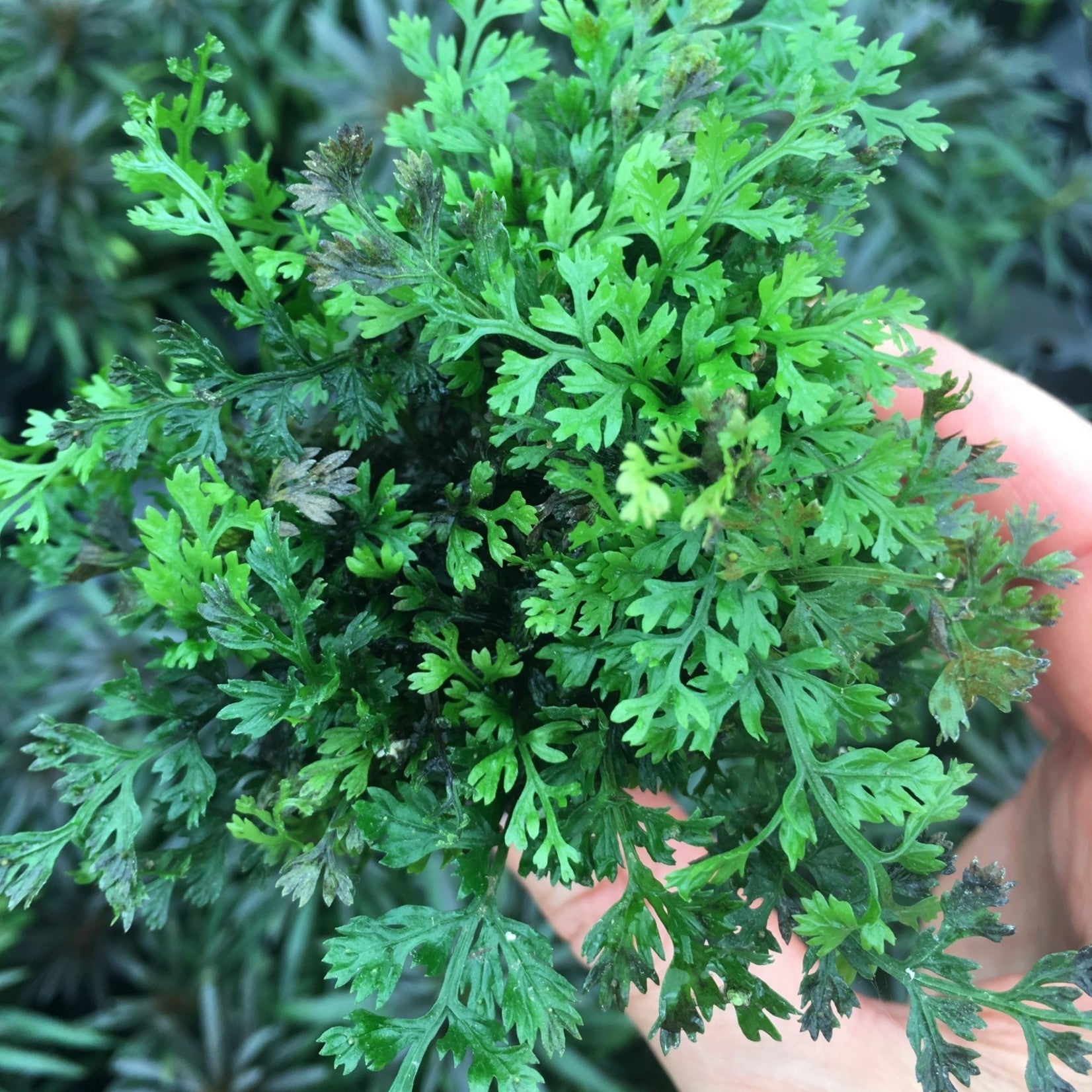
Rhizome plants include Anubias, Java Fern, and Bolbitis. These are the plants where trimming mistakes can be costly.
Critical Rule
Never bury the rhizome in substrate and never cut through the main rhizome unless dividing the plant. The rhizome is the thick horizontal stem from which leaves and roots grow. Burying or damaging it leads to rot.
The Method
- Remove individual leaves by cutting them at the base where they attach to the rhizome.
- Remove any dead or yellowing leaves promptly — they won't recover and they consume energy.
- Trim dangling roots if they look untidy (this is purely cosmetic — it won't harm the plant).
- To divide: use a sharp blade to cut the rhizome into sections, each with at least 3–4 leaves. Each section becomes a new independent plant.
How to Trim Carpet Plants
Carpet plants like Monte Carlo, Dwarf Baby Tears (HC Cuba), and Dwarf Hairgrass require a different approach — you're essentially "mowing the lawn."
The Method
- Use flat scissors and trim across the top of the carpet, maintaining an even height of about 1–1.5 inches.
- Trim frequently (every 2–3 weeks) in small amounts rather than letting the carpet grow thick and cutting aggressively. Thick, overgrown carpets can uproot entirely when trimmed because the lower portions have died off and lost their grip on the substrate.
- Immediately scoop all loose clippings — carpet plant trimmings are tiny and will clog filters if left floating.
How to Trim Floating Plants
Floating plants like Amazon Frogbit, Salvinia, Red Root Floaters, and Duckweed don't need trimming in the traditional sense — you simply remove excess plants by hand.
Keep floating plants covering no more than 50–60% of the water surface. Beyond that, they block too much light from reaching plants below. Scoop out excess weekly and either compost them or share with fellow hobbyists.
Post-Trim Care
- Remove all clippings from the water immediately. Decaying plant matter spikes ammonia and feeds algae.
- Do a partial water change after heavy trimming sessions (25–30%). Trimming releases stored nutrients and organic compounds into the water.
- Don't trim and fertilize on the same day. Freshly cut plants can't absorb nutrients as efficiently, so excess fertilizer just feeds algae. Wait a day or two.
- Reduce lighting slightly for 2–3 days after an aggressive trim to prevent algae from exploiting the temporarily reduced plant mass.
Trimming Schedule
| Plant Type | Frequency | Notes |
|---|---|---|
| Fast-growing stems (Rotala, Hornwort) | Weekly to biweekly | Don't let them shade lower plants |
| Slow-growing stems (Bacopa, Ludwigia) | Every 2–4 weeks | Trim to maintain shape |
| Rosette plants (Swords, Crypts) | Monthly — remove dead leaves only | Never cut healthy leaves in half |
| Rhizome plants (Anubias, Java Fern) | As needed — remove dead/yellow leaves | Don't damage the rhizome |
| Carpet plants | Every 2–3 weeks | Little and often beats aggressive cuts |
| Floating plants | Weekly removal of excess | Keep under 60% surface coverage |
Ready to Upgrade Your Aquarium?
Check out our shop for a variety of fresh, farm-grown plants! Find the perfect options to enhance your aquarium today.
FEATURED BLOG
Glossostigma Elatinoides Care Guide: The Ultra-Low Carpet Plant


June 25, 2026
Glossostigma Elatinoides Care Guide: The Ultra-Low Carpet Plant
Best Aquarium Plants for Shrimp Tanks: Safe Species Your Shrimp Will Love


June 25, 2026
Best Aquarium Plants for Shrimp Tanks: Safe Species Your Shrimp Will Love
DIY CO2 for Aquarium Plants: The Budget Method That Actually Works


June 25, 2026
DIY CO2 for Aquarium Plants: The Budget Method That Actually Works
Aquarium Plant Nutrient Deficiency Guide: Identify and Fix Every Symptom


June 25, 2026
Aquarium Plant Nutrient Deficiency Guide: Identify and Fix Every Symptom
Paludarium Plants: Best Species for Your Half-Land, Half-Water Setup


June 25, 2026
Paludarium Plants: Best Species for Your Half-Land, Half-Water Setup
Riccia Fluitans Care Guide: Growing Crystalwort in Your Aquarium


June 25, 2026
Riccia Fluitans Care Guide: Growing Crystalwort in Your Aquarium
- Choosing a selection results in a full page refresh.

!